18 October 2024 RPA and AI: The Strong Relationship between Two Technologies and Their Place in the Future
The rapid advancement of technology in the business world is driving companies to continuously seek innovative solutions to optimise and streamline their operations. At the forefront of this transformation are two key technologies: Robotic Process Automation (RPA) and Artificial Intelligence (AI). So, what is the relationship between RPA and AI? Which of the two will take the lead in the future? Can AI replace RPA? Let us explore these questions in detail.
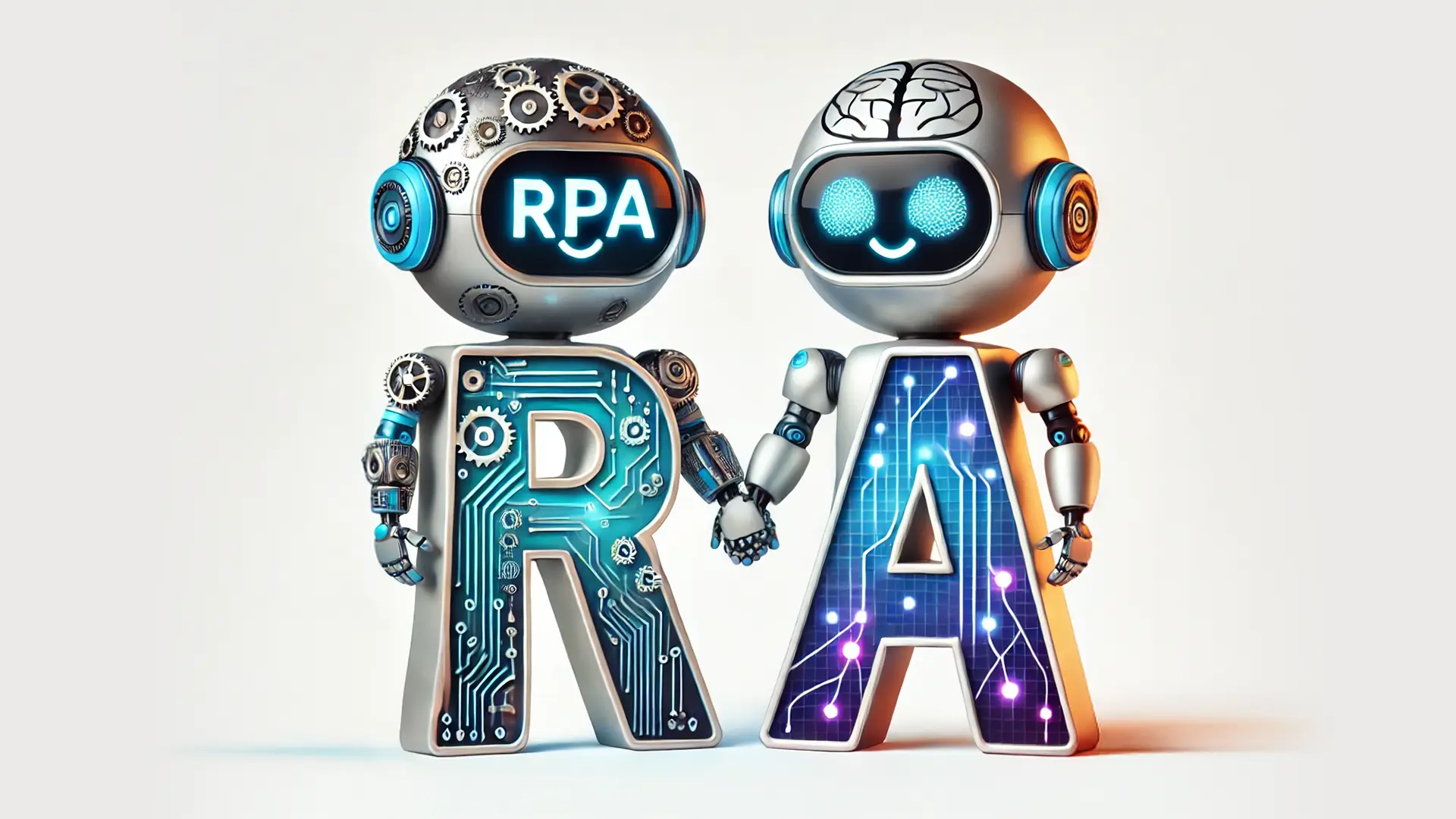
RPA and AI: Two Powerful Technologies
RPA automates repetitive, structured, and rule-based business processes. It provides an effective solution for tasks such as manual data entry, form filling, and document management, particularly in departments like human resources, customer service, and accounting. Its primary goal is to minimise human error and enhance the speed and efficiency of business operations.
AI, by contrast, is a technology that mimics human intelligence and possesses learning and adaptation capabilities. It can handle more complex tasks such as data analysis, predictive modelling, and automated decision-making. AI not only executes processes using existing data but also learns from that data to make increasingly better decisions over time.
The Relationship Between RPA and AI
Although RPA and AI may seem like entirely separate technologies, they are, in fact, powerful tools that complement one another. RPA is well-suited for simple, rule-based processes, but it has limitations when it comes to learning or handling complex decision-making. This is where AI steps in. AI enhances RPA’s decision-making capabilities, enabling the creation of more dynamic and intelligent workflows.
For instance, while an RPA bot handles a form-filling task, AI can analyse the data, detect potential errors or omissions, and recommend corrective actions. An AI-powered RPA system not only automates tasks but also optimises and continuously improves them. The synergy between these two technologies enables rapid, strategic automation of business processes. This integration—known as "Intelligent Automation"—is fast becoming a prominent trend in the evolving landscape of business operations.
So, will AI which is rapidly evolving and increasingly adopted across sectors beyond personal use replace RPA?
AI’s potential and learning capabilities have led many to question whether it will eventually take over RPA’s role. However, it would be inaccurate to offer a definitive “yes” or “no” to this question. Instead, it is more realistic to foresee AI and RPA working together to deliver more powerful, integrated solutions.
RPA will remain a highly effective solution for rule-based, structured business processes. Companies will continue to rely on it for repetitive tasks. However, as AI advances, it will enhance RPA’s limited structure, making AI-powered RPA bots smarter, more data-driven, and increasingly flexible.
Therefore, viewing AI and RPA as entirely separate technologies is, at least for now, inaccurate. The synergy between these two technologies enables rapid, strategic automation of business processes. While AI may not fully replace RPA, it will undoubtedly make it more intelligent and efficient Therefore, integrating AI and RPA as part of intelligent automation will offer companies a significant strategic advantage, strengthening their competitiveness in the evolving business landscape.”